
After water reaches electrical equipment in a Nashville crawl space, keep the space out of use and have a licensed electrical contractor assess the affected system before equipment is restarted. If utility service was disconnected, coordinate the contractor, Metro Codes and Nashville Electric Service (NES) release process. Returning neighborhood power does not complete the assessment of equipment beneath your house.
This guide helps homeowners organize that handoff. It does not authorize entry, determine which equipment is safe or provide electrical repair instructions. Confirm the utility and inspection authority for your address, especially outside Metro Nashville and Davidson County.
Arrange electrical assessment before cleanup equipment
CDC’s flooded-home guidance calls for an electrician to check the electrical system before power is turned on again. It warns against switching power or using electrical tools while standing in water. If reaching a switch requires entering water, leave that task to an electrician. Do not enter the crawl space to unplug equipment, reset a breaker or test whether a pump still works.
Tell the contractor what is known from a safe location: when water was noticed, whether the utility disconnected service and which equipment was reported wet. Existing photographs, installation records and model information may help. Ask the professional to document water exposure and inaccessible areas rather than sending someone under the house just to complete a list.
Get a decision for each affected component
Metro’s electrical flood-repair handout directs replacement of underwater devices and wiring not rated for wet locations by a licensed electrical contractor. It says repair or reconditioning must follow consultation with the equipment manufacturer. Have the contractor apply that guidance to the actual equipment; do not decide that a dry exterior makes a component reusable.
Ask for an itemized record covering affected receptacles, connections, wiring, pump controls, dehumidifier connections and other equipment the contractor identifies. A pump’s intended wet operating environment does not answer the condition of every plug, controller or nearby device. Have the electrician and manufacturer distinguish the relevant components and their exposure.
For each item, record the location, identifying information, observed condition, proposed replacement or other disposition, and who makes the final determination. If an item still needs manufacturer guidance, leave it marked unresolved. Avoid a completion note that simply says “crawl space dried” without addressing the electrical findings.
Confirm the Codes-to-NES release route
The Metro Codes emergency-reconnect page, updated January 30, 2026, describes a licensed electrical contractor making necessary repairs and requesting inspection. After approval, Codes issues a release number to NES for restoring service. Ask your contractor which permit, inspection and service-release steps apply to this particular job.
There is a source detail worth checking before scheduling: the flood handout describes an inspector meeting the contractor at the property, while the current emergency-reconnect page describes virtual inspection. Have the contractor confirm the applicable format directly with Codes. Do not assume an older handout promises a site visit or that every flood-damage inspection can be virtual.
Keep the contractor’s name, permit or release reference, inspection result and any required corrections together. Ask who communicates each completed stage to the next party. A requested inspection, an approved inspection and restored utility service are separate milestones.
Use a written handoff record
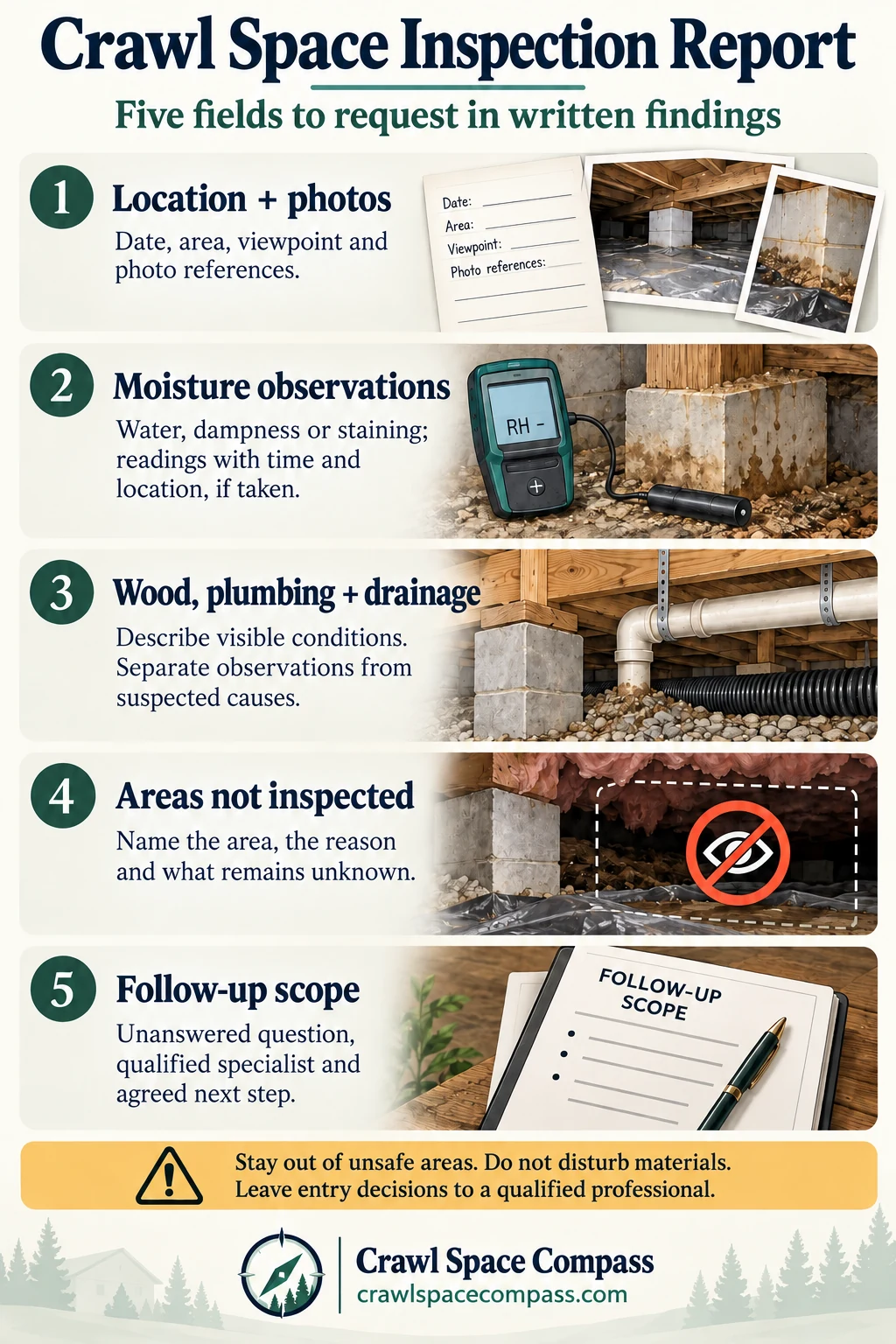
Text version of the inspection record: location and photos; moisture observations; visible building and drainage conditions; areas not inspected; and follow-up scope. For electrical recovery, add these five handoffs:
- Assessment: Who evaluated the affected system, and what still could not be inspected?
- Equipment decisions: Which components require replacement or further manufacturer review?
- Repair and inspection: Who performs the work and requests the applicable Codes inspection?
- Service release: What approval was issued, and has the contractor confirmed its delivery to the utility?
- Remaining restrictions: Which circuits or equipment remain unavailable, and who clears those items?
Clarify what remains off after service returns
Metro’s flood handout describes a situation in which an acceptable main service can be restored while a contractor disconnects an unacceptable portion of the distribution system for later permitted repair and inspection. This is a decision for the contractor, Codes and utility. Homeowners should not isolate or reconnect circuits themselves.
If that route is used, request a written list of the restrictions and remaining work. Ask the contractor how occupants and cleanup crews will be told which equipment remains unavailable. Do not treat working lights upstairs as permission to operate a previously flooded dehumidifier or another affected device.
NES’s outage guidance also notes that restoration in an area may not mean an individual property has power, because additional repairs can be necessary. Follow the utility’s current reporting instructions for an outage; have the electrical contractor address the property’s repair status.
Coordinate the later crawl-space work
If heating or cooling equipment was exposed, Metro’s separate water-damaged HVAC guidance calls for a licensed mechanical contractor’s inspection before restarting. Include that review in the schedule when relevant. Electrical-service release alone does not document the HVAC assessment.
Once the responsible professionals establish safe access and the repair sequence, compare moisture-work proposals through the Nashville directory. Existing profiles for Crawlspace Makeover and Moisture Company describe local crawl-space services. Confirm current scope and availability. Directory inclusion does not establish electrical-repair qualifications or endorse a provider.
Have the moisture installer identify any access or inspection points that replacement liner or insulation could cover. Keep electrical closeout records with the crawl-space inspection report. For a later outdoor drainage trench, use the separate Nashville utility-locate planning guide.
Common questions
Can I turn the equipment on briefly to test it?
Leave evaluation and restart decisions to the qualified professional. A short test does not replace the equipment assessment and applicable inspection.
Does every wet crawl space require an NES reconnect?
This guide does not make that determination. Tell the electrician and utility whether service was disconnected and what was affected; ask which process applies.
What is the most useful final document?
Request an equipment-by-equipment disposition, applicable permit and inspection records, service-release information, and a clear list of unresolved restrictions.
Source review: October 15, 2026. Metro’s historical March 2021 flood-information page, updated March 2026, still links the repair handouts. Current emergency-reconnect guidance and CDC’s August 2026 flooded-home guidance were also checked. Confirm the property’s actual process with Codes and the utility.