
Before accepting a Knoxville crawl space cleanup quote, get a written answer to three questions: what comes out, who takes it away, and which facility will accept it. “Remove old insulation” can mean removal from the framing, removal from the property, or a complete disposal service. Those are different scopes. Local disposal restrictions make that distinction especially important when a job includes loose insulation, renovation debris or unidentified materials.
This guide uses City of Knoxville waste-service rules. It does not establish acceptance rules for Knox County convenience centers, Farragut or private haulers. Sources were reviewed on October 15, 2026.
The Knoxville disposal details that change a quote
Knoxville’s bulky-waste guidance excludes construction, renovation and demolition debris from curbside bulky collection. Examples include flooring and lumber. A contractor’s plan to leave removed building materials at the curb therefore needs a different, confirmed collection arrangement.
The city’s Transfer Station page accepts certain residential and commercial construction loads, but specifically excludes loose, blown insulation, including bagged insulation. It also lists asbestos and contaminated soil among unacceptable materials. Bagging loose insulation does not make that listed material acceptable there. Other insulation types still need a facility-specific answer; the page is not blanket approval for every batt, board or mixed load.
The facility’s resident-only free disposal provisions exclude commercial vehicles and waste and distinguish city residents from county residents. Do not build a contractor’s disposal allowance around a homeowner benefit. Have the hauler confirm the material, vehicle, destination and current conditions before work begins. The station lists 865-215-6700 for questions.
Start with a removal inventory, not “clean out crawl space”
Ask the estimator to label photographs by area and separate existing loose debris from installed materials. Useful categories include stored belongings, construction offcuts, old ground covering, insulation, abandoned equipment and materials needing specialist assessment. Identify which belongings stay. A wide photograph alone may not show whether material is attached, hidden behind equipment or present throughout the space.
Ask what could not be inspected and how that affects the estimate. If one bay was inaccessible, the proposal should say whether its removal work is excluded, provisionally allowed for, or subject to another inspection. You should be able to match each removal line to a location and a stated quantity or measurement method. Leave entry and handling decisions to qualified professionals.
Six items to put in the cleanup proposal
- Removal boundary. Identify the materials and areas included. Does the job remove the existing ground covering, fallen insulation and construction scraps, or only clear an access route? Record any material that will remain and the reason.
- Haul-off responsibility. State who moves material off the property. If a subcontracted hauler is involved, identify who books that service and remains your contact. Separate temporary staging from final removal.
- Disposal destination. Request the proposed facility or approved disposal route for each material category. Ask the contractor to verify acceptance for its actual commercial load. A generic statement that everything goes to the local dump leaves a material question unanswered.
- Included charges and limits. Ask whether containers, transport, disposal charges, extra trips and pickup are included. If an allowance applies, specify its quantity and how an overage is documented and approved. Compare the same removal scope before comparing totals.
- Access and property protection. Document the proposed carry route, staging or container location, protection of occupied areas and any access limitations. Ask who restores disturbed access covers or landscaping. Do not assume a photograph of the crawl space explains the route to the truck.
- Completion evidence. Request photographs of the cleared areas, a list of exclusions or newly exposed concerns, and available disposal receipts or tickets. Agree on when staged waste and containers leave. “Cleanup complete” should describe both the crawl space and the property outside it.
Use the broader crawl space quote-comparison guide when cleanup is bundled with repairs, insulation or moisture-control work. Keep removal and replacement as separate line items so both bidders are pricing the same tasks.
A practical way to resolve two different bids
Imagine two hypothetical estimates for the same house. One says “remove damaged insulation and install liner.” The other names the affected bays, includes off-site disposal and excludes material behind an inaccessible duct. The second is easier to audit, but the missing bay still needs an answer. Neither description establishes that the other contractor is wrong.
Send both estimators the same questions: “Which areas did you inspect? Does removal include hauling everything off-site? Where will this particular insulation be accepted? What happens if the inaccessible area contains more material?” Ask for revised written scopes before choosing. This is a comparison method, not a claim about typical Knoxville pricing.
Keep the findings that cleanup may uncover
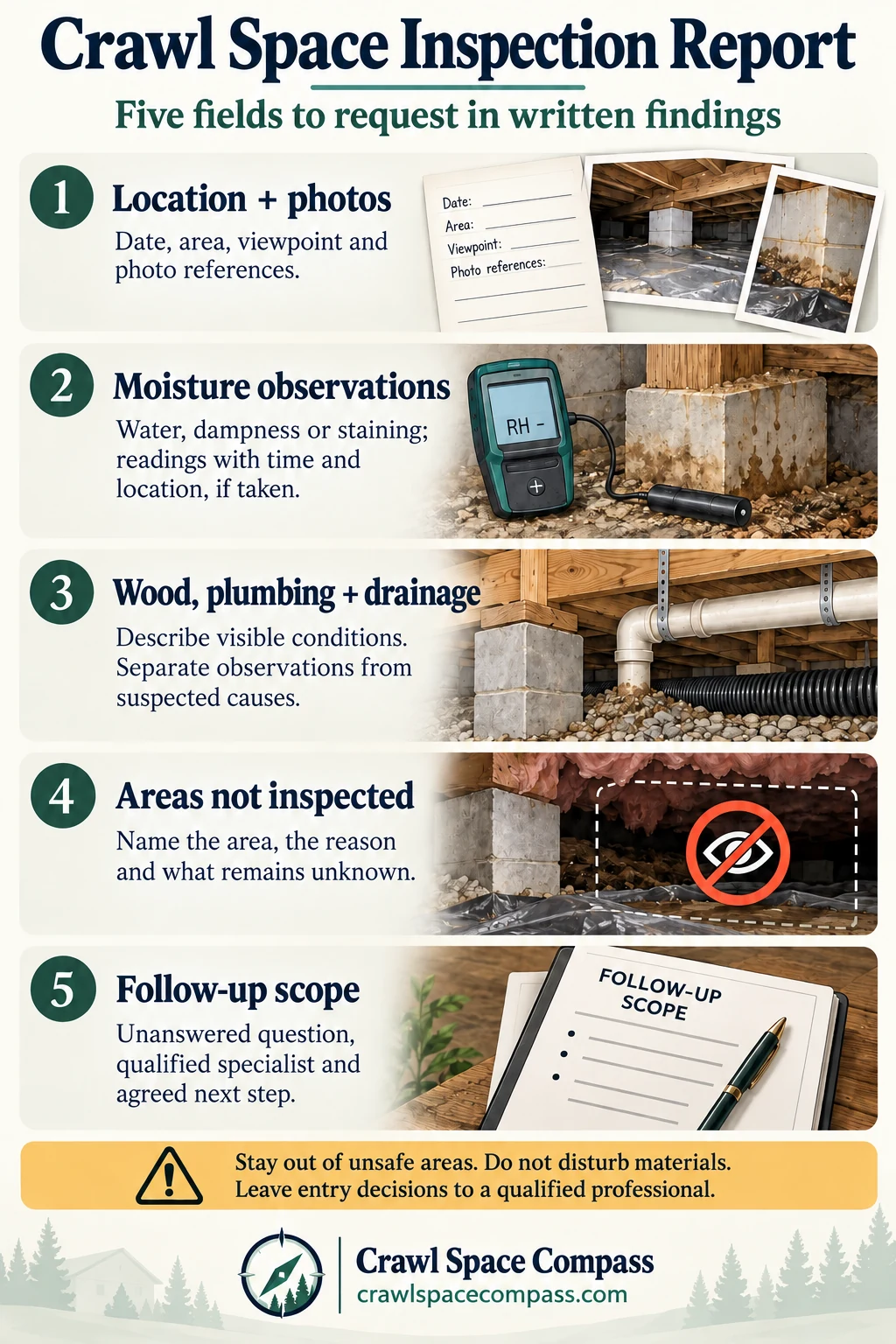
Removal may expose an area that the first visit could not document. Agree on a pause-and-review step before newly proposed repairs or coverings conceal those findings. This existing report checklist helps keep the evidence attached to the right location.
Graphic checklist in text
- Location and photos: Date, area, viewpoint and photo references.
- Moisture observations: Water, dampness or staining; readings with time and location, if taken.
- Wood, plumbing and drainage: Describe visible conditions separately from suspected causes.
- Areas not inspected: Name the area, reason and remaining unknowns.
- Follow-up scope: Unanswered question, qualified specialist and agreed next step.
Safety: Stay out of unsafe areas. Do not disturb materials. Leave entry decisions to a qualified professional. The pictured notes and sensor are illustrative, not property readings.
When ordinary haul-off is not enough
A cleanup quote should explain what happens when the crew encounters unidentified material. EPA says appearance alone generally cannot establish whether a material contains asbestos. Suspect material that may be disturbed calls for evaluation by a trained, accredited asbestos professional. Do not handle or sample it to help an estimator. See EPA’s homeowner asbestos guidance.
Old chemical containers need a separate plan, too. Knoxville’s household hazardous waste facility excludes business-generated hazardous waste, unidentified materials and household hazardous waste delivered in commercial or work vehicles. Ask the facility and contractor to resolve the route before collection; do not assume a household drop-off service covers a contractor’s truck.
Use local profiles to ask scope-specific questions
These existing directory profiles are unranked starting points for discussing a crawl-space project. Listing a company here does not verify a disposal arrangement, specialist credential or quote.
- Crawl Space Ninja of Knoxville: its Knoxville repair page describes insulation, moisture and mold-related work. Ask which removed materials its proposed scope includes and whether off-site disposal is included.
- Crawlspace Medic of Knoxville: its local page describes crawl-space inspection, encapsulation and repair. Ask how inspection limitations and any additional removal discovered during work will be recorded.
If cleanup leads to a larger enclosure project, use our separate Knoxville permits and equipment guide to plan the next scope. A clear disposal agreement closes one part of the job; it does not establish that insulation replacement, structural repair or encapsulation is needed.