
If you receive a KUB sewer smoke-testing notice while planning crawl-space work in Knoxville, keep it with the project records. A test observation may reveal a plumbing or sewer-lateral issue that needs follow-up before enclosure materials hide the area. Confirm the notice with KUB, ask what was actually found and assign any needed plumbing work separately from moisture-control installation.
This guide is for properties served by KUB’s wastewater system. Confirm the sewer provider on the account rather than relying on a Knoxville mailing address or another KUB service. It does not announce testing at any particular property.
Confirm the notice and understand what the crew is testing
KUB’s wastewater inspection page explains that smoke testing helps locate places where outside water can enter the sewer, including uncapped lateral cleanouts and prohibited connections. The utility also uses camera inspections. This is a sewer-system investigation, not a crawl-space encapsulation inspection or a promise to find every defect.
KUB describes advance postcards and door hangers before street-level smoke testing. Its current-work list can change, so check the notice and current utility information rather than assuming an older neighborhood PDF is a new schedule. KUB lists 865-524-2911 for checking crew identification or nearby work. Routine inspection crews do not need to enter the home for this work.
Save the notice, date, contact information and any case or project reference. Share them with the plumber and crawl-space contractor if follow-up could affect the installation sequence.
Record observations without trying to diagnose the pipe
An illustrative KUB smoke-testing notice for basin 36A4 explains that smoke at plumbing vent stacks is expected, while smoke at gutters may indicate an improper connection. It also explains that smoke can enter a building through plumbing defects and directs residents to the contact on their door hanger. This older notice explains the process; its mapped area and relative dates are not a current testing announcement.
If smoke appears indoors during a confirmed test, report its location to the crew contact. The notice warns that people with respiratory problems should avoid breathing the test smoke because it can irritate them, and that it may activate smoke alarms. Do not assume unexplained smoke or an alarm is part of testing; leave and call 911 when fire is suspected or the cause is uncertain.
Ask the responding professional to distinguish the observation from the diagnosis. “Smoke seen near the crawl-space access” is a useful report. It does not by itself identify a broken pipe, establish who must repair it or show that a whole lateral needs replacement. Do not enter the crawl space or manipulate plumbing to reproduce the observation.
Know which pipe and access point are involved
KUB’s April 2025 sewer-lateral brochure describes the customer-owned lateral as the underground pipe from the home’s internal plumbing to the connection with KUB’s sewer. It describes a cleanout as a capped access pipe reaching the surface and recommends knowing its location for maintenance. A property-line cleanout should not be mistaken for proof that ownership stops there.
Ask the plumber to identify the affected section, the investigation method and the access needed. Request photographs or camera records where appropriate, with an explanation of any uninspected sections. Mark relevant locations on a simple sketch showing the house, crawl-space entrance and exterior cleanout. The sketch is a coordination record, not a utility locate or permission to excavate.
KUB’s collection-system explanation notes that damaged private laterals can admit roots or debris and contribute to blockages or overflows. If KUB sends a defect notice, ask which finding requires action and how completion must be documented. Keep the utility’s request with the contractor’s proposed remedy.
Do not turn a sewer repair into an unreviewed drainage connection
KUB’s prohibited-connections guidance identifies groundwater sump pumps, foundation drains and roof downspouts among connections that must not send outside water into its wastewater system. The page distinguishes groundwater pumps from pumps handling laundry or other household wastewater. Have the plumber identify what a pipe actually carries before deciding where it belongs.
If a crawl-space bid adds a groundwater pump, its discharge route needs a separate answer. Disconnecting a prohibited sewer connection does not automatically approve a new outlet into a ditch, storm drain or neighboring area. Ask the responsible local authority and installer to resolve the proposed route for the property.
This matters when two crews are involved: the sewer contractor may correct a lateral while the crawl-space contractor adds drainage. Put the agreed endpoint on the scope so the second project does not recreate the first problem.
Make the handoff between plumbing and enclosure explicit
- Finding: Keep the utility notice and the plumber’s explanation of the defect or remaining uncertainty.
- Scope: Identify investigation, repair and cleanup separately from liner, insulation and dehumidification work.
- Timing: State what must be completed or inspected before affected areas are covered.
- Access: Identify service openings and cleanouts that must remain usable.
- Restoration: Name who repairs crawl-space materials disturbed during plumbing work.
- Completion: Collect the invoice, photographs, required inspection results and any utility closure confirmation.
Ask KUB about the deadline and review process on your actual notice. Its April 2025 brochure describes an enforcement sequence that can end in water-service termination; do not assume an old generic timeline changes the letter you received. Raise a disputed finding or repair delay with the utility promptly.
Common questions
Does no visible smoke mean the crawl-space plumbing is cleared?
Do not treat that observation as a complete condition report. Ask what the inspection covered and whether the reported problem requires another investigation.
Will a liner fix a sewer-lateral defect?
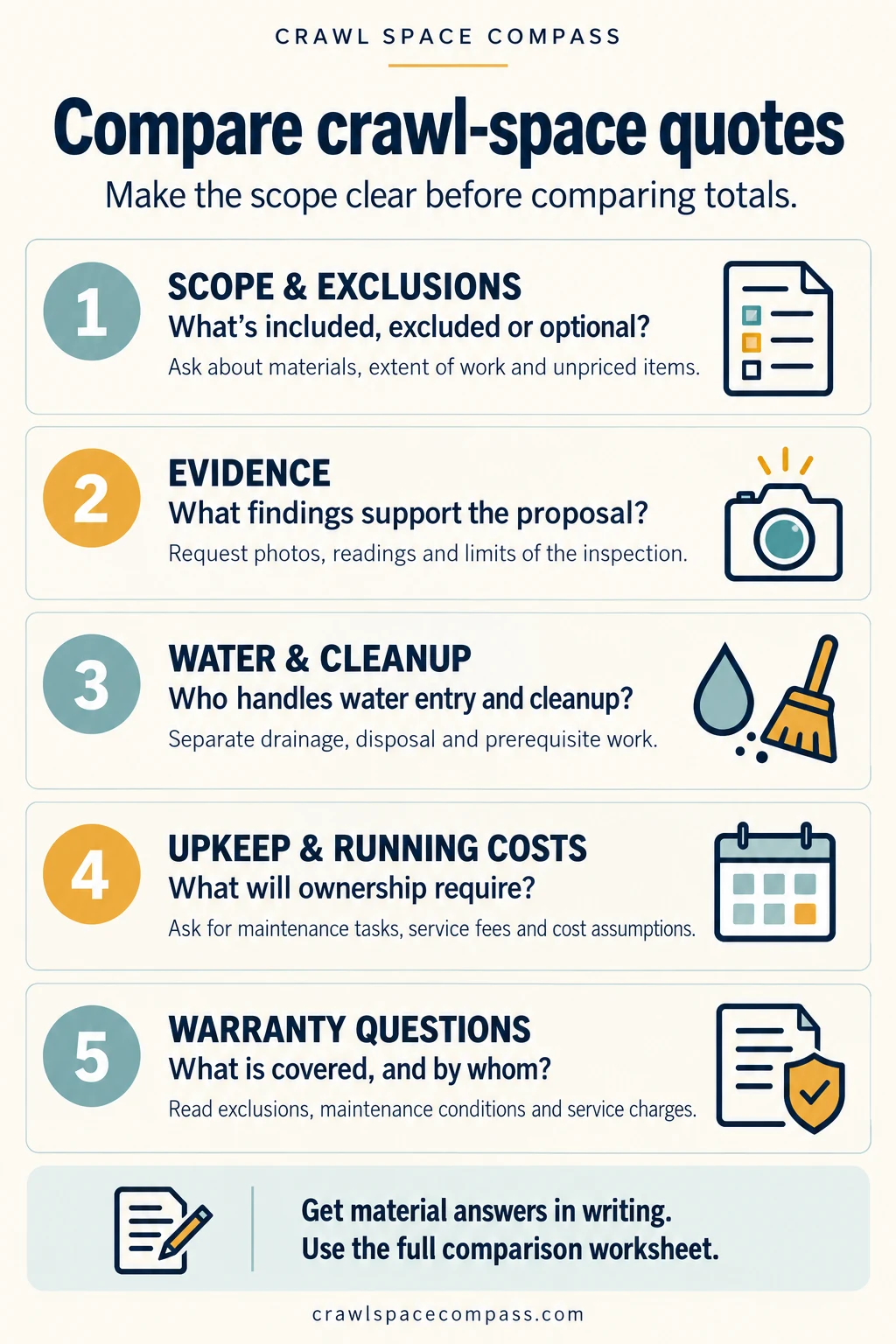
No. A documented plumbing defect needs its own remedy and completion record. Compare the separate responsibilities with our crawl-space quote-comparison guide.
Where should I check the rest of the encapsulation scope?
Use the separate Knoxville permit and equipment planning guide. It covers jurisdiction and enclosure-related review beyond this sewer-testing question.
Sources reviewed October 14, 2026. The lateral brochure is dated April 2025; the basin 36A4 notice is an older process example. Confirm current notices directly with KUB. This guide does not diagnose a pipe, determine an individual deadline or authorize a drainage connection.