
Before crawl-space insulation or liner work in Raleigh, ask someone qualified to trace the clothes-dryer exhaust from the laundry room to its outdoor outlet. A disconnected or badly routed duct can leave a moisture problem underneath an otherwise finished installation. Put any needed exhaust repair, inspection and future cleaning access into the written scope before the crawl-space crew covers the area.
This guide concerns conventional vented dryers and work reviewed by Raleigh. Confirm the property’s inspection jurisdiction; a Raleigh mailing address alone does not settle it. A purpose-built ventless dryer requires a different check of its manufacturer’s installation and condensate instructions.
Trace the whole route before choosing the moisture solution
The federal Building America Solution Center’s dryer-venting guide explains that exhausting into a crawl space adds moisture and can damage surrounding materials. It distinguishes the short connection behind the dryer from the exhaust duct continuing through the building. Finding an outdoor hood does not establish that every section between it and the appliance is connected.
Ask the inspecting professional for photographs identifying the laundry connection, the underfloor route and the exterior termination. Have inaccessible sections identified explicitly. If lint or damp insulation appears beneath the laundry area, record the location and timing without assuming the dryer explains all the moisture. Rainwater entry, plumbing leaks and other problems can coexist.
The practical question is whether the proposed repair addresses a documented condition. A dehumidifier quote should not leave a known disconnected exhaust unassigned. For rain-related observations elsewhere under the house, use the separate Wake County drainage-route guide to keep the investigations clear.
Use Raleigh’s inspection criteria to ask better questions
Raleigh lists dryer-vent size, length and sealed joints among common mechanical inspection problems. Its residential inspection troubleshooting page also flags equipment access and missing or disregarded installation instructions. These categories give you a useful review checklist; they do not establish the dimensions or allowable route for your particular dryer.
The city’s housing-code equipment standards call for dryer exhaust to end outdoors with a backdraft damper. They prohibit a screen at the termination and fasteners that obstruct exhaust flow, and prohibit connecting dryer ducts to a vent connector, vent or chimney. Ask the mechanical professional to evaluate the actual assembly against applicable requirements and the appliance instructions.
A crawl-space proposal may describe sealing foundation openings without identifying which opening serves the dryer. Have that distinction marked on the work drawing. Do not let a general instruction to seal openings stand in for a reviewed exhaust detail.
Give the exhaust work its own scope line
Ask bidders to distinguish inspection, cleaning, repair and rerouting. They answer different questions. A cleaning visit does not necessarily include replacing damaged sections, and a new exterior hood does not establish the condition of the hidden route.
- Observed condition: Which parts were inspected, and what photographs or measurements support the recommendation?
- Proposed work: Is the contractor retaining the route, reconnecting a section, replacing materials or proposing a new path?
- Design basis: Who checks the dryer model, duct length, bends, supports, termination and manufacturer instructions?
- Trade responsibility: Who performs the exhaust work and confirms the applicable permit and inspection requirements?
- Crawl-space restoration: Who restores liner seams, insulation or wall penetrations disturbed by the repair?
- Future access: How can the duct be inspected and cleaned after the installation is complete?
Request a separate price or a clearly described inclusion. If the route cannot yet be inspected, keep that uncertainty visible rather than accepting a fixed repair description based on an assumption.
Agree on the sequence before materials conceal the work
Raleigh’s residential inspection sequence places mechanical rough-in after ventilation and exhaust ducts are installed and concealed ducts are supported and unrestricted. Its mechanical-final checklist calls for a complete system and manufacturer instructions on site. These are general inspection descriptions; ask the assigned reviewer which visits and visibility requirements apply to this existing-home scope.
A useful written sequence identifies the exhaust assessment, any necessary trade repair, required inspection, crawl-space finishing and final handover. If an unexpected damaged section appears during installation, establish who pauses the affected work and explains the additional scope. Photograph completed repairs before surrounding materials make them harder to see.
You can organize this without entering a tight or unsafe crawl space. Ask the contractor to provide the evidence and explain the route from accessible locations.
Keep a usable maintenance record
The U.S. Fire Administration’s dryer-safety handout recommends professional installation and service, lint-filter cleaning, checking for damaged or restricted venting behind the dryer, and confirming that the exterior covering opens during operation. Follow the appliance instructions and arrange appropriate duct cleaning; a new liner does not remove the dryer’s maintenance needs.
Keep the dryer model, installation instructions, route photographs, repair invoice and applicable inspection results together. Ask the service provider to explain where future cleaning access is available and what would require moving equipment or opening the crawl-space enclosure. If service later damages the liner, the handover should make the restoration contact clear.
For broader home-safety concerns, Raleigh offers a smoke-alarm and home-safety-check request. Check its current program limits. That service is separate from mechanical repair and does not replace an exhaust inspection.
Common questions
Can the dryer exhaust help dry a sealed crawl space?
No. A vented dryer’s moisture-laden exhaust belongs outdoors. Have the actual route corrected rather than treating it as a crawl-space drying method.
What if the dryer is ventless?
Confirm the model and installation instructions. Building America’s ventless-dryer guide addresses purpose-built condensing equipment; removing a conventional dryer’s duct does not convert it into that type of appliance.
Does an encapsulation quote automatically include dryer-duct work?
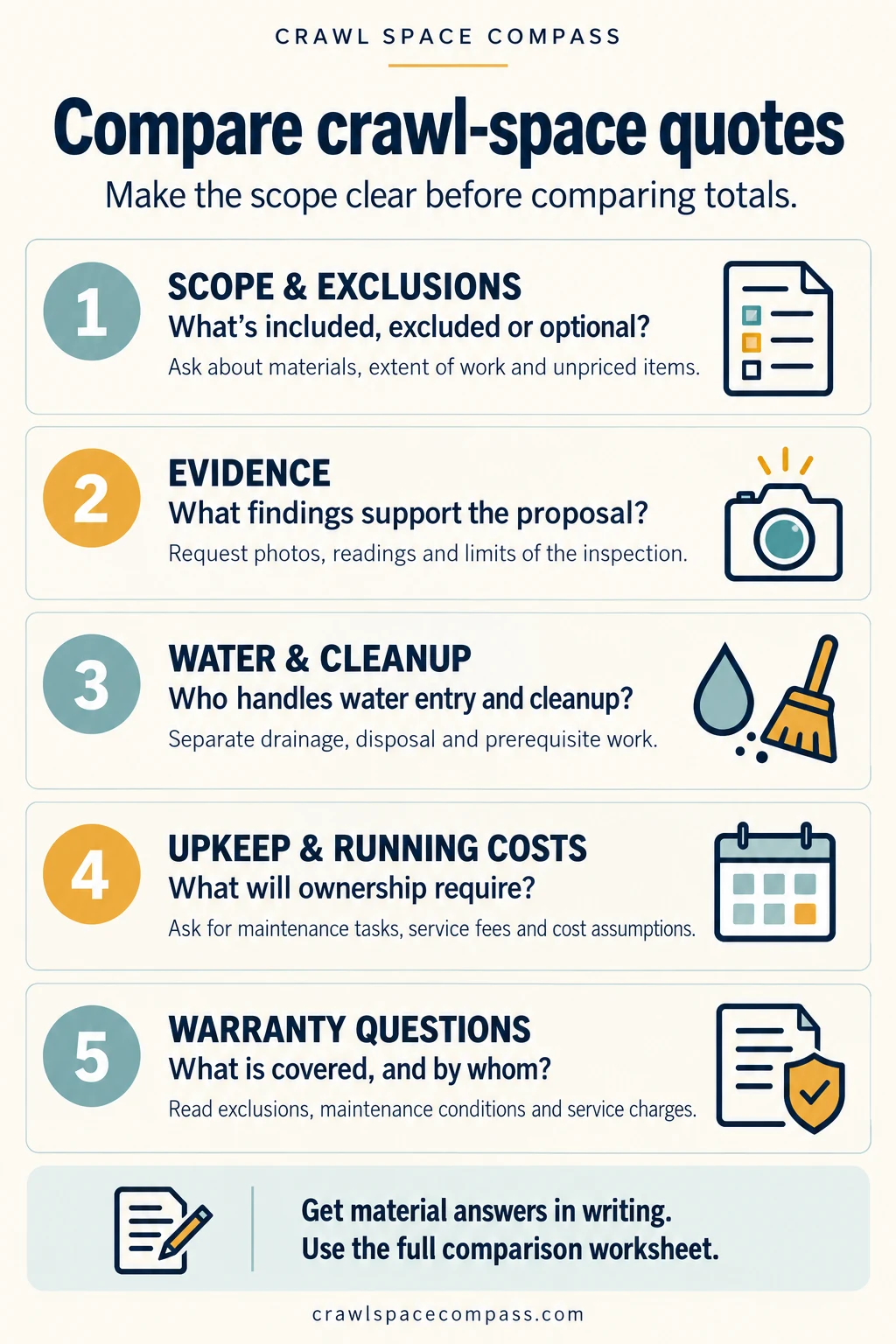
Only the written scope can answer that. Use the quote-comparison worksheet and guide to record the responsible trade, exclusions, inspection steps and restoration work before agreeing to the project.
Official sources reviewed October 14, 2026. Agency pages and older federal guidance are linked for context; current local review and the manufacturer’s instructions govern the proposed installation. This is a homeowner planning guide, not a duct design or property-specific inspection.