
Crawl Space Condensation on Ductwork
Last reviewed: October 6, 2026.
Crawl space duct condensation forms when a duct's outer surface is colder than the surrounding air's dew point. The fix may involve duct insulation and its outer vapor barrier, air-leak repairs, crawl-space moisture control, or an HVAC fault. First establish whether the water is forming on the duct or arriving from another source.
This guide focuses on that distinction and the evidence to request. It does not assume that every sweating duct requires full encapsulation or complete duct replacement.
Crawl space duct condensation: five checks before choosing a fix
Use this visual to organize a professional inspection. Record what you can observe safely; ask the inspector for photos and measurements from areas you should not enter.
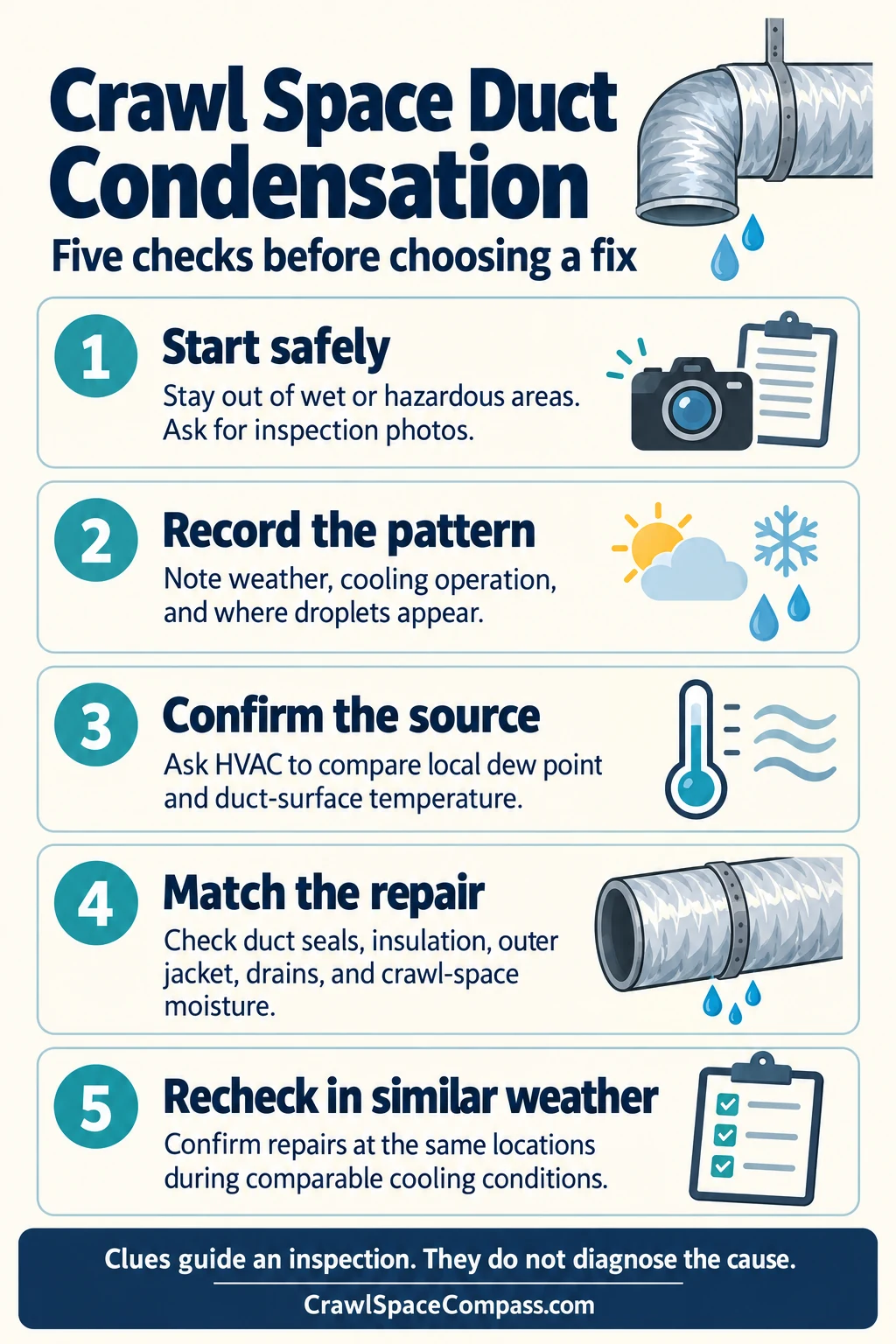
Read the five-check visual as text
- Start safely. Stay out of wet or hazardous areas. Ask for inspection photos.
- Record the pattern. Note weather, cooling operation, and where droplets appear.
- Confirm the source. Ask HVAC to compare local dew point and duct-surface temperature.
- Match the repair. Have the appropriate professional check duct seals, insulation, the outer jacket, drains, and crawl-space moisture.
- Recheck in similar weather. Confirm repairs at the same locations during comparable cooling conditions.
Clues guide an inspection. They do not diagnose the cause.
Why cold ducts sweat
The National Weather Service defines dew point as the temperature at which air reaches saturation when cooled without changing its moisture content. Around a sufficiently cold duct, water vapor can condense into droplets, much as it does on a cold drink.
Illustrative example: air at 75°F and 60% relative humidity has a dew point of approximately 60°F. A duct exterior at 55°F is below that point and can collect moisture. These are hypothetical conditions, not recommended settings or a diagnosis of your crawl space.
Both sides of that comparison matter. Lowering the air's moisture content reduces its dew point. Proper duct insulation helps keep the exposed outer surface warmer. The temperature of air inside the duct is not the same measurement as the temperature of the duct's outer jacket.
EPA's mold course illustrates condensation on uninsulated air-conditioning ducts and identifies exterior insulation as a correction. Persistent wetness also warrants checking nearby materials, rather than simply wiping away the droplets.
Is the water condensation, a drain problem or another leak?
Use the pattern to guide the inspection. These observations are clues, not definitive tests:
- Droplets distributed across a cold duct surface during cooling: condensation is plausible. Compare local dew point with surface temperature.
- Water at one damaged jacket or exposed-metal joint: have the local insulation, vapor barrier and duct connection checked.
- A drip near an air handler or drain pipe: inspect the condensate pan, drain and equipment rather than assuming the duct itself is sweating.
- Water following rain, including when cooling is off: investigate building or ground-water entry as well as plumbing. The water after rain guide helps organize that separate investigation.
- A wet stain on top of a duct: look for a possible source above it. Water can travel before reaching the visible drip.
Do not cut open a duct jacket or remove insulation to prove the cause. Avoid entering a wet crawl space or touching wet electrical equipment. Have hazards evaluated before investigation proceeds.
Record the conditions before the service visit
A technician has a better starting point when the report is more specific than “the ducts leak.” From safe access, or using an inspector's photographs, document:
- The date, weather, thermostat setting and whether cooling was operating.
- Crawl-space temperature and relative humidity at the same time.
- Which runs are wet, with a simple sketch and close-up photographs.
- Whether moisture covers whole runs or appears mainly at joints, supports or damaged areas.
- Nearby wet soil, pooled water, open ground-cover seams or plumbing leaks.
- Any reported cooling problems, unusual icing, weak airflow or equipment alarms.
Ask the technician to measure the affected surface temperature and interpret it with local air conditions. Have them explain any instrument limitations. A measurement from the center of the crawl space may not describe a colder, wetter corner.
Save before-and-after readings with their locations. The crawl-space humidity guide covers monitoring; the inspection checklist helps organize the wider condition report.
A copyable service-visit record
Copy these lines into a note for each affected location. Leave unknowns blank; a homeowner does not need to enter the crawl space or collect technical measurements to request service.
- Observation: date/time; recent weather; cooling on or off; thermostat setting.
- Location: duct run or room served if known; photo number; droplets, stained jacket, or nearby pooled water.
- Technician findings: local air temperature and relative humidity; calculated dew point; duct outer-surface temperature; measurement method and limitations.
- Source and scope: identified cause; affected materials; required repair; responsible trade; unresolved questions.
- Follow-up: who returns; conditions to check; photographs and readings to compare; result at the original wet location.
A single humidity number from a remote sensor does not establish why one fitting is wet. Ask that measurements be tied to a location and time, and have the technician explain what evidence would change the diagnosis.
Inspect the insulation and the outer vapor barrier
Duct insulation and its outer covering perform related jobs. Insulation limits heat transfer; a suitable, continuous outer vapor-resistant jacket helps limit water-vapor entry toward cold surfaces within the assembly. Ask HVAC to check insulation coverage, damaged joints and jacket continuity, including around fittings and supports.
DOE's sealed and insulated metal-duct guidance describes exterior insulation with a vapor barrier and proper sealing of the duct itself. It also calls for insulation to remain aligned and in contact with the duct. Air-leak sealing and outer-jacket repair are different details; a bid should identify both where necessary.
Ask the contractor to specify materials and installation requirements for the actual duct type. Do not assume floor or wall insulation is interchangeable with a listed duct-insulation assembly. Our crawl-space insulation guide discusses the separate floor-versus-wall decision.
Wet insulation needs evaluation before it is covered. EPA says wet or moldy fiberglass duct insulation cannot be effectively cleaned and should be removed and replaced. Have a qualified HVAC contractor identify the affected assembly and specify the appropriate scope. Covering wet material or spraying it does not establish that the moisture problem is resolved.
Three separate details to request in a duct-repair quote
- The duct: which air-carrying joints or connections need sealing, and how the work will be checked.
- The insulation: the specified material and coverage, including fittings and supports, and what happens to damaged or wet sections.
- The outer jacket: how the vapor-retarding covering and its seams will remain continuous for the actual duct assembly.
DOE’s flex-duct guidance describes the distinct connections and covering details for that assembly. Ask the technician to show which of these details failed. A proposal that only says “wrap ducts” leaves the condition of the underlying duct, wet material, and jacket seams unclear.
Address the crawl-space moisture load too
Even good duct work should be evaluated alongside conditions around it. Ask about uncovered soil, bulk water, plumbing leaks and uncontrolled outdoor-air entry. Review drainage options for liquid-water problems and the dehumidifier guide for airborne-moisture management.
Opening vents is not a universal drying strategy. DOE's unvented crawl-space guidance explains that humid outdoor air can increase condensation during warm weather. Closing vents also requires a coordinated design, including drying, combustion safety and applicable local requirements. Do not block required flood openings or change combustion-air provisions to address sweating ducts.
Ask the crawl-space contractor and HVAC contractor to agree on what each will correct. A dehumidifier cannot mend a torn duct jacket, and new duct insulation does not eliminate an active plumbing leak.
When should HVAC take the lead?
Call HVAC when the problem is localized to ducts or equipment, insulation is damaged, a condensate drain is suspect, or cooling performance has changed. Report visible ice and abnormal operation promptly. Have the technician diagnose airflow, equipment and drainage issues rather than guessing from condensation alone.
If water is reaching electrical components, keep clear and arrange urgent professional help. Do not open equipment panels, work on refrigerant lines or improvise drainage or wiring repairs.
A useful service report names the affected component, records the relevant measurements and explains the proposed correction. If replacement is recommended, ask why repair is unsuitable and which portions of the system can remain.
Verify the result during comparable conditions
Ask for photographs of completed duct and jacket repairs before access becomes difficult. The follow-up should check the previously wet locations during cooling and weather reasonably similar to the original conditions. A dry inspection on a cool day is limited evidence about a summer condensation problem.
Record whether the droplets return, whether previously wet materials have been addressed, and whether humidity control and condensate disposal operate as intended. If multiple trades are involved, identify who owns the follow-up. Use the quote comparison guide to put those responsibilities in the scope.
A worked example: one wet fitting, two open questions
Suppose an inspector photographs droplets at a damaged duct-jacket seam and wet soil below. This is a hypothetical example, not a diagnosis. The wet soil could have received the drip, or a separate water source could be contributing moisture to the crawl space.
Ask HVAC to identify the duct defect, inspect affected insulation, and document relevant air and surface conditions. Ask the appropriate contractor to trace any separate water entry. Keep both questions open until evidence explains them. The follow-up should revisit the fitting and the ground below during comparable conditions, with each trade's responsibility written down.
Frequently asked questions
Does sweating ductwork mean a refrigerant leak?
No. Surface condensation follows the temperature and moisture relationship described above. An HVAC technician should diagnose equipment problems when other symptoms are present.
Will a dehumidifier stop the condensation?
It may help when excessive airborne moisture is part of the cause. Damaged insulation, jacket gaps, drainage faults and other water sources still need assessment.
Is duct condensation itself mold?
No. It is liquid water. Persistent moisture may support mold growth, so inspect affected materials and address the cause. See the mold guide for the next steps.
Should I change the thermostat to fix it?
Do not rely on a thermostat change as the repair. Document your normal settings and have the technician evaluate the system under those conditions.
About this guide: Primary sources were checked October 6, 2026. The dew-point and wet-fitting examples are illustrative; the original visual, service record, and verification checklists are editorial guidance. This article gives no universal duct R-value, equipment diagnosis or guaranteed humidity setting.